Crypto Trading Team Credibility: Can On-Chain Accountability Overcome a Criminal Record and Zero VC Oversight?
This is the podcast debate transcript companion to the pillar article profiling the FINREV team. The episode surfaces the trust objections the article’s redemption narrative doesn’t neutralise: that a criminal history combined with no institutional oversight is a specific risk profile that on-chain vesting alone may not resolve, and that a potential 268-day flat drawdown period — far from being a negative — is examined here as the strongest legitimacy signal the team has produced.
“For the full team profile — including trading track record, on-chain vesting architecture, and the bootstrap funding model that replaces VC oversight — read the pillar article this debate was built around.”
📖 Read the Full Article: Inside the Finrev Team: The Hedge Fund Refugees and Ex-Convicts Building HyperTrend
⚡ Listen to the 03 Podcast on Spotify
Podcast Episode: 03 – The Team Behind the Math
Duration: ~6 minutes
Published: February 2026
Topic: When a reformed criminal, a BlackRock quant, and a Ukrainian drone pilot build a trading system together
📻 About This Podcast
This podcast was generated using Google’s NotebookLM from the research in this article. The conversational debate format explores the concepts from multiple perspectives—examining both advantages and potential concerns—which can help clarify complex ideas that might be dense in written form.
This is a supplementary tool. The article contains the full technical analysis and primary sources. The podcast is for those who prefer audio learning or want to hear counterarguments explored through discussion.
📖 Read the Full Article: Inside the Finrev Team: The Hedge Fund Refugees and Ex-Convicts Building HyperTrend
⚡ What This Debate Revealed That the Article Didn’t Cover
The article presents the team’s credentials and meritocratic culture. The debate raises three trust-related challenges that the article’s narrative framing tends to smooth over:
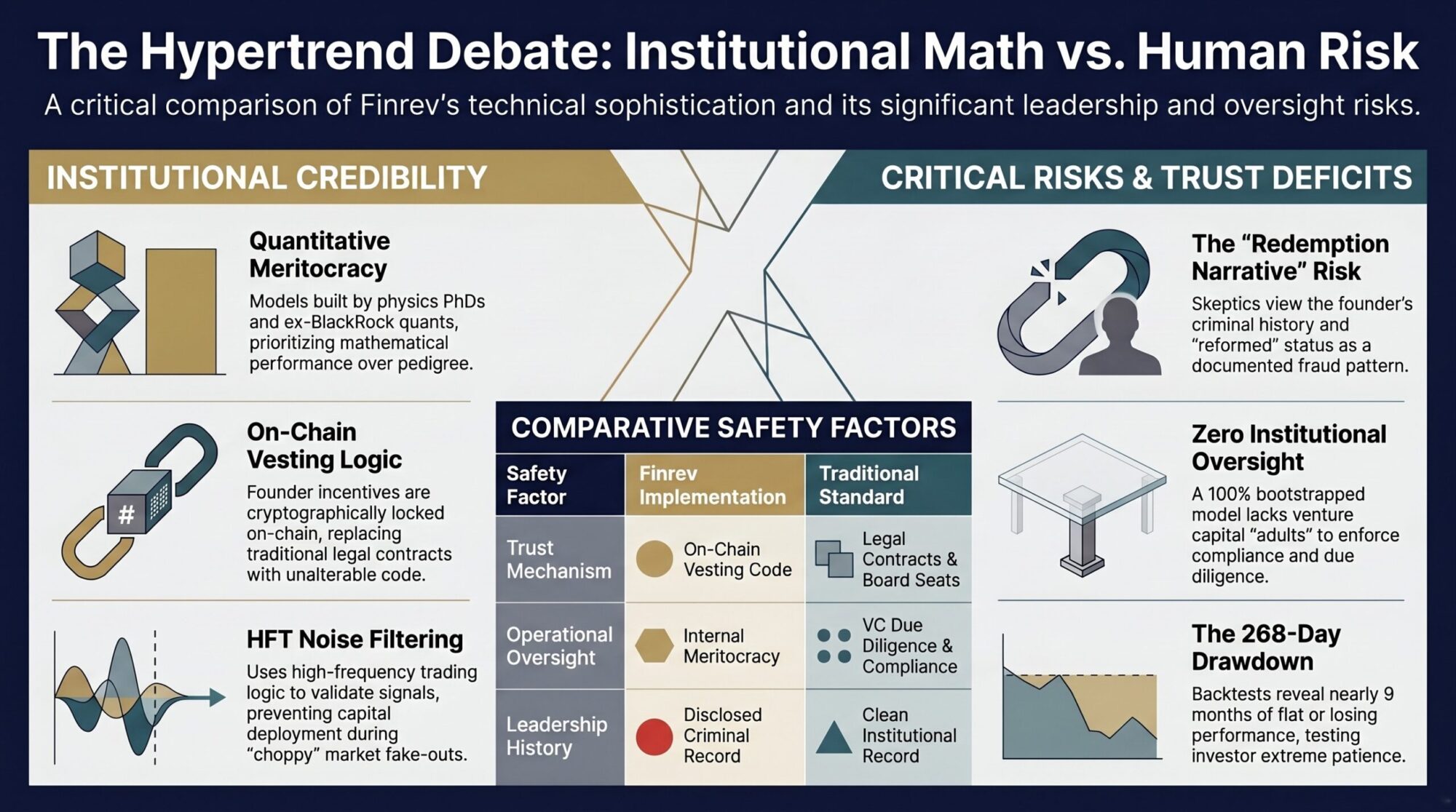
- A criminal record combined with no VC oversight is a specific trust deficit that math alone can’t resolve. The sceptic’s position — “I’m not sure I want to hand my capital to someone with that history, regardless of how good the quants are” — is a rational risk assessment, not paranoia. On-chain vesting addresses the exit risk but doesn’t fully resolve the operational trust question during the platform’s ongoing development.
- The “redemption story” narrative is a known pattern in financial fraud. Scott’s radical transparency about his past is unusual and genuinely disarming — but the debate is right to flag that self-described reform is not the same as externally verifiable accountability. The on-chain vesting contracts are the mechanism that moves this from narrative to cryptographic proof.
- The 268-day flat period as a legitimacy signal is counterintuitive and requires explanation. Most retail investors will see 9 months of flat/negative performance as a red flag rather than evidence of an honest probability engine. This episode makes the best case in the series for why transparent drawdown disclosure is actually the strongest trust signal available.
🧠 SCR Analysis: Where the Debate Lands
This is the shortest episode in the series (~6 minutes) and the most narrative-driven. The trust question it raises is real and isn’t fully resolved by the debate alone — which is appropriate. Trust in a financial operator is earned over time through consistent execution, not through a single compelling episode.
The strongest evidence in the episode isn’t Scott’s story — it’s Artem’s. A junior developer whose quant models outperformed BlackRock PhD-level work, and whose strategy was adopted on merit alone, is the real signal about how this team operates. Meritocracy in practice, not claimed meritocracy, is what separates functional trading firms from narratively appealing ones.
The SCR verdict: The team structure is genuinely unusual and the trust mechanisms (on-chain vesting, transparent drawdown disclosure, cryptographically verifiable performance) are more robust than traditional financial governance in specific ways. The criminal background is a legitimate flag that deserves acknowledgement rather than dismissal — and the honest answer is that the on-chain architecture reduces the relevance of founder character to a degree that traditional financial structures simply cannot match. Verify the contracts. Judge by execution. The math is public.
Episode Summary
This episode presents a debate over FINREV’s legitimacy as a financial technology company bridging institutional-grade quantitative trading with the retail crypto market. The conversation weighs the company’s “redemption story” leadership against its high-level technical architecture, utilizing a hybrid of trend following and high-frequency trading to filter market noise and avoid “fake outs.” A central theme is the tension between the founder’s criminal past and the meritocratic team of elite quants, including former BlackRock physicists, who prioritize mathematical rigour over marketing hype. To address security concerns, the discussion highlights on-chain vesting and a bootstrapped model to align incentives with users rather than relying on traditional venture capital oversight. Ultimately, the system requires extreme investor patience during long periods of stagnation, but its transparency regarding drawdowns suggests a probability-based engine designed for long-term survival rather than overnight gains.
Full Transcript
Host: Welcome to the debate. Today, we are stripping down the engine of the HyperTrend trading strategy and the team behind it, FINREV. The question is simple but heavy. Is this a legitimate institutional-grade system finally unlocked for the retail market, or is it just another guru narrative with a high-risk backend?
Expert: I’m arguing this is a genuine breakthrough, a system built by physics PhDs and ex-BlackRock quants that really lives by the code “research first, hype never.”
Host: And I’m here representing the sceptical wallet. I’ve seen enough flashy crypto roadmaps to know that “democratizing finance” usually means exit liquidity for the founders. So, we’re looking at a team with no venture capital oversight, led by a guy with a criminal record promising the world. I just want to know if this Trader Army is actually safe or if we’re just, you know, buying a redemption story.
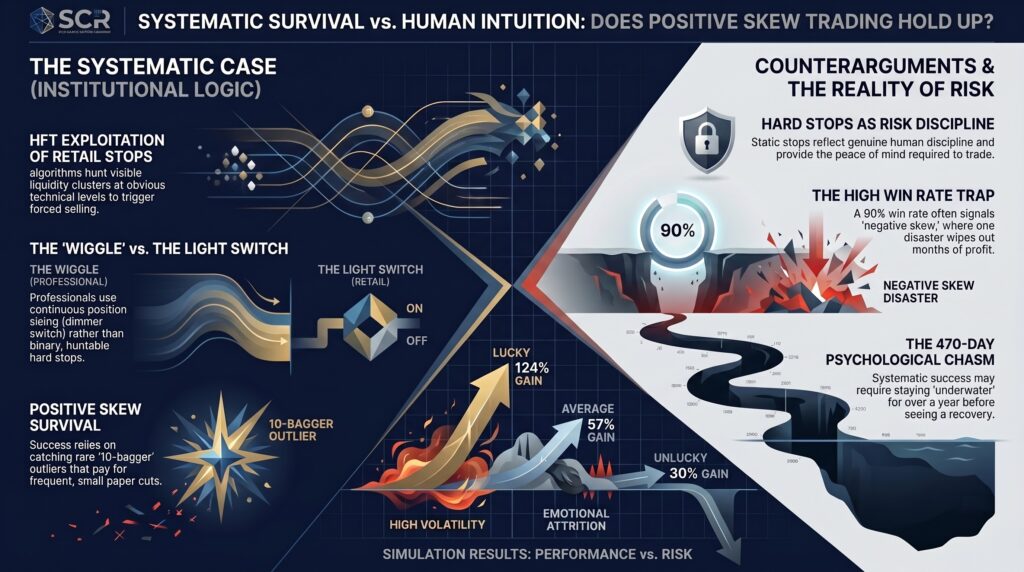
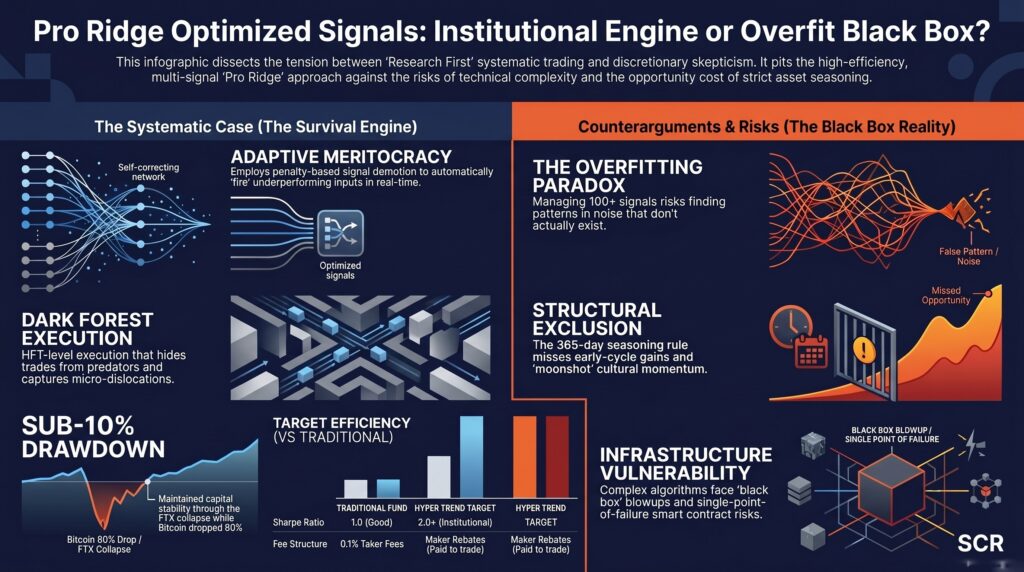
Expert: You’re focusing on the wrapper, but I want to start with the mechanics. The team calls this the “bastard child of trend following and HFT.” And that distinction really matters. Most retail bots are just blunt instruments. They buy when a line crosses a line. That’s it. HyperTrend is different. It uses trend following to capture those massive moves, like you know, Bitcoin running from 20K to 60K. But the “bastard” part is the high-frequency trading logic.
Host: Okay. But HFT is a buzzword. What is it actually doing for the user?
Expert: It’s about filtering. In a choppy market, a normal trend bot gets absolutely slaughtered by fake outs. This system applies smoothing, mathematical filters that validate the signal before a single cent is deployed. It’s designed to sit on its hands and just ignore the noise, only striking when the probability aligns.
Host: So, it’s not gambling, it’s sniper fire. That all sounds great in a brochure, but execution at the end of the day comes down to people. And the head of the snake, Scott Phillips, has a highlight reel that’s well, it’s hard to swallow. He openly admits to being a former addict and criminal who spent time in prison. He calls himself a “reformed scumbag.” And while the honesty is shocking, do I really want to hand my capital to someone with that history?
Expert: Scott’s background gives him survival instincts. Sure. But he isn’t the one building the models. That’s where the Trader Army comes in. I mean, look at James Hodges, a physics PhD and an ex-BlackRock quant. He left the biggest asset manager in the world to work here. You don’t quit BlackRock to join a scam. You quit because the math here is better.
Host: A shiny resume helps. I get it. But it doesn’t guarantee profit.
Expert: True. But look at the internal culture. It’s a ruthless meritocracy. Scott himself admits he’s only the sixth smartest guy in the room. They have Artem, a Ukrainian refugee and a former drone pilot. He came in as a junior dev, but his quant work was so superior it actually outperformed the BlackRock PhD models in certain sectors. So what do they do? They run Artem’s strategy. They don’t care if you have an Ivy League degree or a war record. If your math wins, your code runs.
Host: That sounds noble, I guess. But let’s talk about the safety net because there isn’t one. They are 100% bootstrapped with zero venture capital. In finance, VCs are the adults in the room. They enforce compliance, legal structures, and due diligence. Without them, you’re trusting a well, a “trust me, bro” structure.
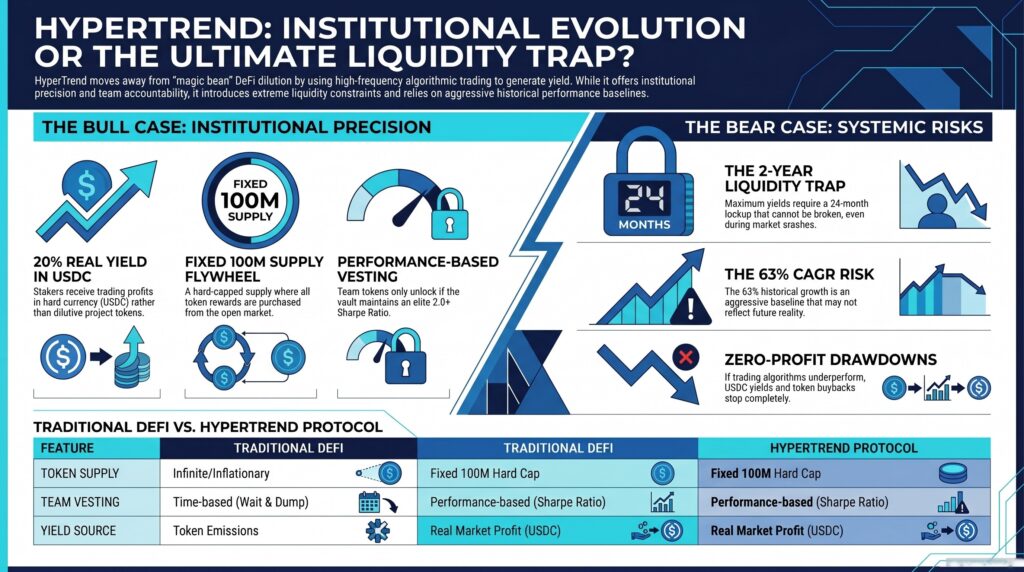
Expert: I disagree entirely. I would argue VCs are actually the danger here. Their whole model requires dumping on retail to achieve their 100x returns. By rejecting VCs, FINREV aligns its incentives with the users. They use on-chain vesting to replace that “trust me” factor.
Host: On-chain vesting. Can you translate that for the non-technical listener?
Expert: Yeah, of course. It means the rules are written into the blockchain, not some legal contract that can be shredded. The founders’ tokens are cryptographically locked. They literally cannot sell until the community has been liquid for a set period. If Scott wanted to cash out tomorrow, the code wouldn’t let him. That is significantly more secure than a board of directors that can be bought.
“The on-chain vesting mechanics that address the trust deficit raised in this episode are explained in detail in the pillar article about the FINREV team.”
Read article 03 Inside the Finrev Team: Hedge Fund Refugees & Ex-Convicts
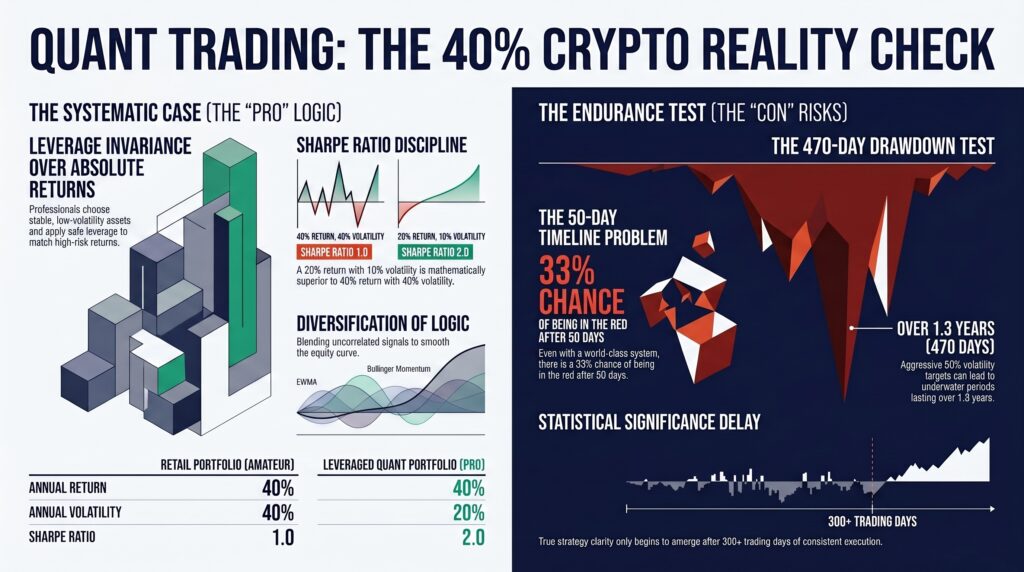
Host: Okay. The code is transparent. Fair enough. But the data it reveals is brutal. I looked at the backtests, specifically the drawdowns. There was a period of 268 days where the system did nothing but lose small amounts or just stay flat. That is 9 months. In the crypto world, that is an eternity. Investors will panic and leave long before the trend returns.
Expert: Well, only if they don’t understand the environment. Vince, the team’s researcher, who comes from marine ecology, puts it perfectly. Markets are like ecosystems. They have seasons. You don’t get a harvest in winter.
Host: My mortgage is due every month, not just in harvest season.
Expert: Then buy a bond. I mean, if you want institutional outlier returns, you have to endure institutional boredom. A Ponzi scheme offers you a smooth, straight line up right until it goes to zero. A real probability engine has flat periods. The fact that they highlight that annoying 268-day drought proves they aren’t selling a fantasy. They’re filtering out the noise to keep you alive for the big move.
Host: I have to admit that specific transparency is disarming. Most projects hide their bad months. These guys put them right on the front page. And the HFT filtering logic does explain why they might sit out for so long. I’m still terrified of a 9-month drawdown. But I will concede that the structure, the on-chain vesting, and the meritocracy of the quants is far more robust than I gave them credit for.
Expert: It’s just mathematics applied consistently. It’s not exciting every single day, but it’s real.
Host: It’s certainly a grown-up approach in what is often a childish market. I’ll be watching to see if the execution pays off.
Expert: That’s the bet. Thanks for listening to the debate.
Key Takeaways
- Meritocracy Over Pedigree – Artem (Ukrainian drone pilot, junior dev) outperformed BlackRock PhD models. His strategy runs because the math wins, not credentials. Scott admits he’s the sixth smartest in the room.
- HFT Filtering Prevents Fake Outs – The “bastard child” architecture applies mathematical smoothing to validate signals before deploying capital, sitting on hands during choppy markets instead of getting slaughtered by false breakouts.
- On-Chain Vesting Replaces VC Oversight – Founders’ tokens cryptographically locked until community liquidity milestones. Code prevents Scott from selling even if he wanted to — more secure than board approval.
- Zero VC Funding Aligns Incentives – Rejecting venture capital eliminates the “dump on retail for 100x” model. 100% bootstrapped means team profits only when users profit.
- 268-Day Drawdown Transparency – Most projects hide bad months. FINREV highlights 9-month flat periods on the front page, proving it’s a probability engine, not a Ponzi scheme’s smooth-line fantasy.
- Criminal Past Becomes Survival Edge – Scott’s “reformed scumbag” history provides street-level survival instincts while BlackRock quant (James Hodges) handles institutional-grade models. Unlikely team, legitimate math.
🎯 When Credentials Don’t Matter, Math Does
A former convict, a BlackRock physicist, and a Ukrainian drone pilot walk into a trading firm. The punchline? They built a system that survived what killed everyone else.
Next Step: Watch the introduction video to understand the meritocratic culture, how on-chain vesting replaces trust-based governance, and why 268-day flat periods prove legitimacy, not weakness.
The Uncomfortable Truth: If you need every month to be green, this isn’t for you. Markets have seasons. Winter exists. The team that admits this upfront is more trustworthy than one promising eternal spring.
Resources Mentioned
- Scott Phillips – FINREV founder, self-described “reformed scumbag” with a criminal past, provides survival instincts
- James Hodges – Physics PhD, ex-BlackRock quant, left the largest asset manager to build better math
- Artem – Ukrainian refugee, former drone pilot, junior dev whose quant models outperformed BlackRock PhDs
- Vince – Marine ecologist applying ecosystem dynamics to market structure
- On-Chain Vesting – Cryptographically locked founder tokens preventing sells until community milestones
- Zero VC Model – 100% bootstrapped, no venture capital oversight or exit liquidity pressure
- 268-Day Drawdown – Documented 9-month flat period proving probability engine vs. Ponzi fantasy
About This Podcast
This episode explores the tension between unconventional leadership and institutional-grade execution. For investors evaluating teams, understanding how meritocracy, on-chain governance, and transparent drawdowns replace traditional credibility signals is essential in crypto’s trust-free environment.
Related Articles:
- Inside the FINREV Team: Traditional Finance Meets Crypto Innovation
- On-Chain Vesting: How Smart Contracts Replace VC Oversight
- Why a Proven Crypto Trading System is Rebuilding on Hyperliquid
Transcript generated from Notebook LM podcast discussion. Edited for clarity and formatted for web publication.
HyperTrend Vault Update — September 2026
HyperTrend has spent months building out a dedicated Hyperliquid Vault — a self-contained on-chain trading structure, not just an account executing trades on the exchange — and it’s now running company and staff capital through that Vault in beta. The Vault runs the legacy Finrev algorithms with edge modules HyperTrend’s own quant team has built and fully integrated into their platform. That Vault infrastructure is what the public will get access to when it launches, alongside the $Trend Coin airdrop, both on HyperTrend’s roadmap for late 2026.
I’m a personal investor in HyperTrend and have tracked this project for years — the Vault’s smart contracts and trade history will be on-chain and auditable, which is the kind of transparency I look for.
Subscriptions to the legacy API-based HyperTrend system are now paused while they prepare for the public launch of the HyperTrend Vault on the Hyperliquid platform. More details will be coming out over the coming weeks, including the whitepaper on the $Trend Coin tokenomics. Leading up to the public launch, this is where I’ll post what I learn, as I learn it.
Want updates directly? Email me at vince1@systematiccryptoresearch.com — happy to answer questions too.